 AH 61
AH 61
 AH 60
AH 60
 AH 59
AH 59
 AH 58
AH 58
 AH 57
AH 57
 AH 56
AH 56
 AH 55
AH 55
 AH 54
AH 54
 AH 53
AH 53
 AH 52
AH 52
 AH 51
AH 51
 AH 50
AH 50
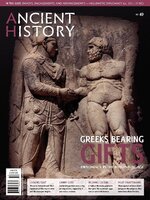 AH 49
AH 49
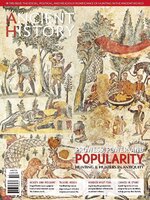 AH 48
AH 48
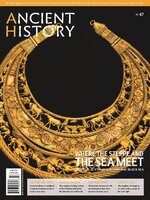 AH 47
AH 47
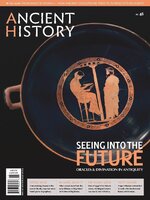 AH 46
AH 46
 AH 45
AH 45
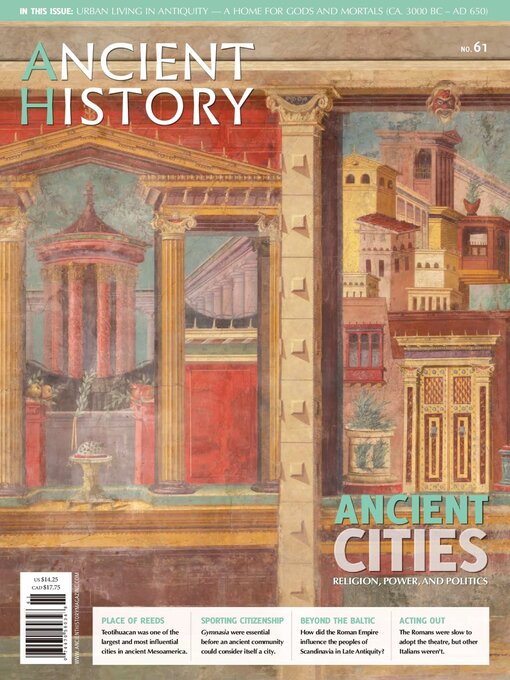
Ancient History looks at every aspect of the ancient world: you'll find articles covering politics, society, literature, language, religion, economics, and art - all in one magazine! Like its big brother, Ancient Warfare, Ancient History Magazine is a bi-monthly, 60-page magazine that relies on a thematic approach: each issue is centered around one specific subject. From ancient Egyptian trade and Roman family life to the lost city of Pompeii, there's sure to be something for everyone - all presented in a well-researched but accessible, fun manner.
Ancient History Magazine
EDITORIAL - WE BUILT THIS CITY
PRELIMINARIES • RECENT DISCOVERIES, RESEARCH, AND NEWS IN THE FIELD OF ANCIENT HISTORY
ITALIC ENTERTAINMENT • Theatre was one of the most popular forms of entertainment in the ancient world, attracting large audiences from every level of society, from the elites to enslaved people. Whether attending a comedy, tragedy, musical performance, or spectacular public festival, the theatre was at once a place of entertainment and a celebratory, social occasion.
INTEGRATED NOT ISOLATED • At first glance, the trade in Laconian pottery throughout the Aegean seems to contradict the image of Sparta as a place of austerity and isolationism. Thanks to the increasing integration of archaeological data into research on the Spartan economy, a new perspective is now possible. Rather than being isolated, Sparta appears to have been integrated into several trade networks at different levels, especially during the Archaic period.
DIVINE NEIGHBOURS • In Mesopotamian thought, cities were the centres of civilization and order, set apart from the wilderness where demons and monsters roamed. The gods made cities even before the humans who would populate them. The city's entire economy, political system, and society were all organized around monumental temples, and would remain so for thousands of years.
THE SUBARA • Each of Rome's seven hills had its own character. There was the temple district of the Quirinal, the solidly middle-class Viminal, the aristocratic Caelian, the literally palatial Palatine, the working-class Aventine, the lofty Capitoline, and the down-at-heel Esquiline. Further down the hill, near the heart of Rome, sat the Subara, an area notorious for its packed apartment blocks and louche lifestyle.
THE POLEIS IN MESOAMERICA • For a long time, Mesoamerican cities were understood as ceremonial and politico-religious centres, hosting a relatively small resident population, made up of political and religious elites and the personnel required for their support, while the majority of the population lived dispersed across the surrounding countryside and visited urban centers mainly for markets and religious festivals.
LAHUN • On the edge of Egypt's fertile Nile Valley, where the green farmland of the Fayum meets the desert, lie the remains of one of the ancient world's most fascinating planned communities: Lahun (also known as El-Lahun or Kahun). Founded during Egypt's Middle Kingdom (ca. 2055–1650 BC), Lahun offers an unusually detailed glimpse into urban life nearly 4000 years ago.
A MARK OF CIVIC IDENTITY • When the traveller Pausanias visited the small site of Panopeus in central Greece in the second century AD, he hesitated to call it a city at all: the settlement had no buildings for its magistrates, no theatre, no agora, no fountain, and no gymnasium. For Pausanias, a gymnasium was not a luxury. It was a prerequisite. Its absence disqualified a community from being considered a polis, reflecting a deep-rooted Greek conviction that the gymnasium was among the defining monuments of urban life.
ALL THE GREAT KING'S HORSES • Horses were highly valued in antiquity. They served as both status markers and as beasts of war. From at least the Late Bronze Age, horses appear to have been...